Table Of Content
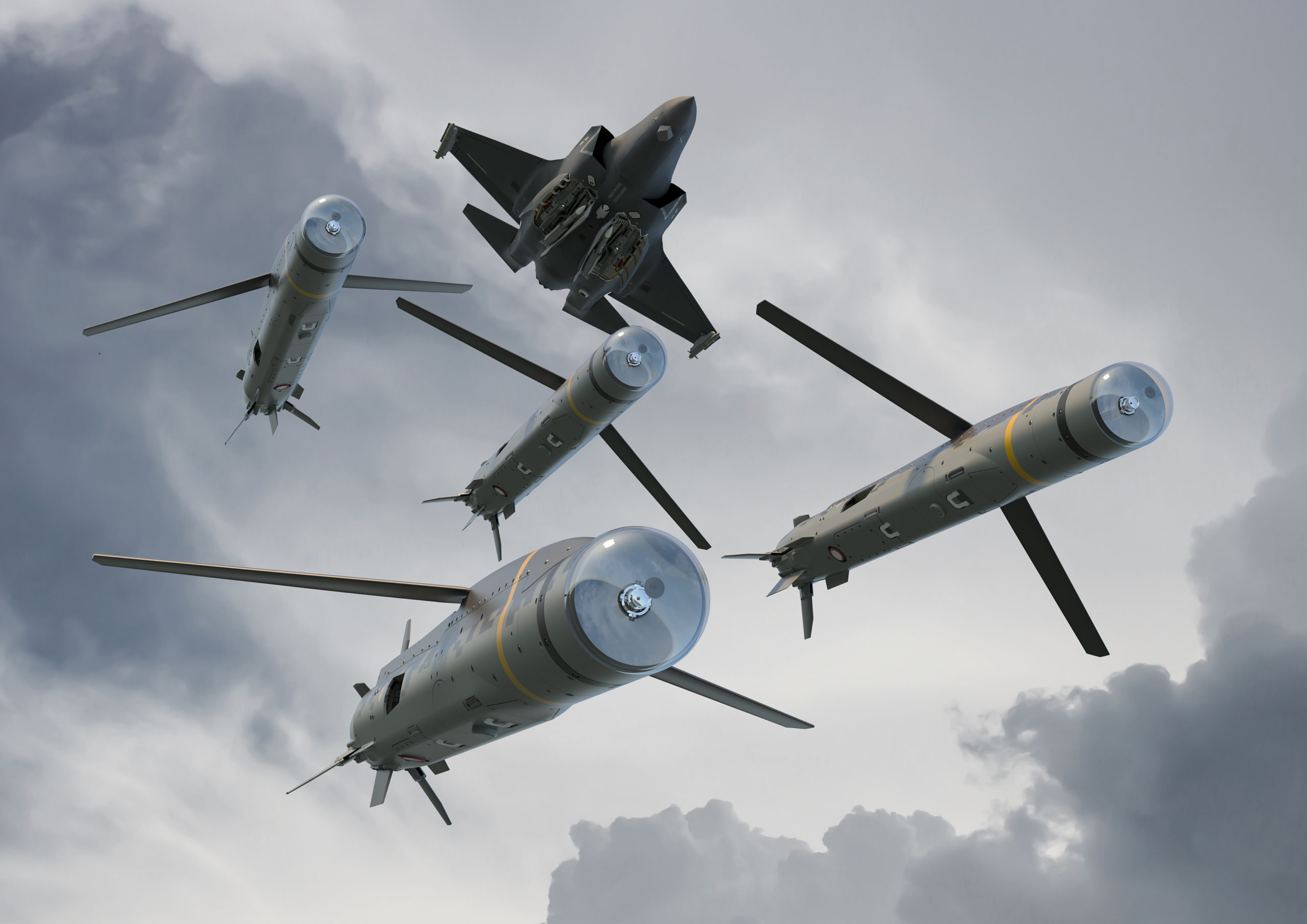
In conclusion, the TAURUS KEPD 350 cruise missile stands as a testament to the relentless pursuit of precision and effectiveness in modern warfare. Its stealth-oriented design, impressive range and speed, Tri-tech navigation system, and MEPHISTO warhead collectively elevate its status as a technological marvel. As military landscapes continue to evolve, innovations like the TAURUS KEPD 350 will undoubtedly play a pivotal role in shaping the future of strategic engagements.
What Melania Trump Allegedly Told Donald Ahead of Presidency Revealed
This sophisticated system seamlessly integrates various sensors and reference databases, enabling the missile to perpetually monitor its position and dynamically adjust its trajectory. By harnessing real-time data, the missile maintains an unwavering course, effectively circumventing obstacles and adapting to dynamic battlefield conditions. Saab serves the global market of governments, authorities and corporations with products, services and solutions ranging from military defence to civil security.
Finland opens airspace for NATO surveillance and intelligence flights
Series production of the Taurus KEPD 350 missiles for Luftwaffe began in 2004. The German Federal Office for Defense Technology and Procurement (BWB) contracted Taurus Systems for the development of the high precision stand-off guided missile system in 1998. Successful tests on the image assisted navigation system of Taurus KEPD 350 were conducted in June 2001. On Friday, Ukraine's ambassador to Germany, Oleksiy Makeev, dismissed the idea of sending Taurus missiles being an escalation, calling this a "pseudo-argument" in a post to X, formerly known as Twitter.
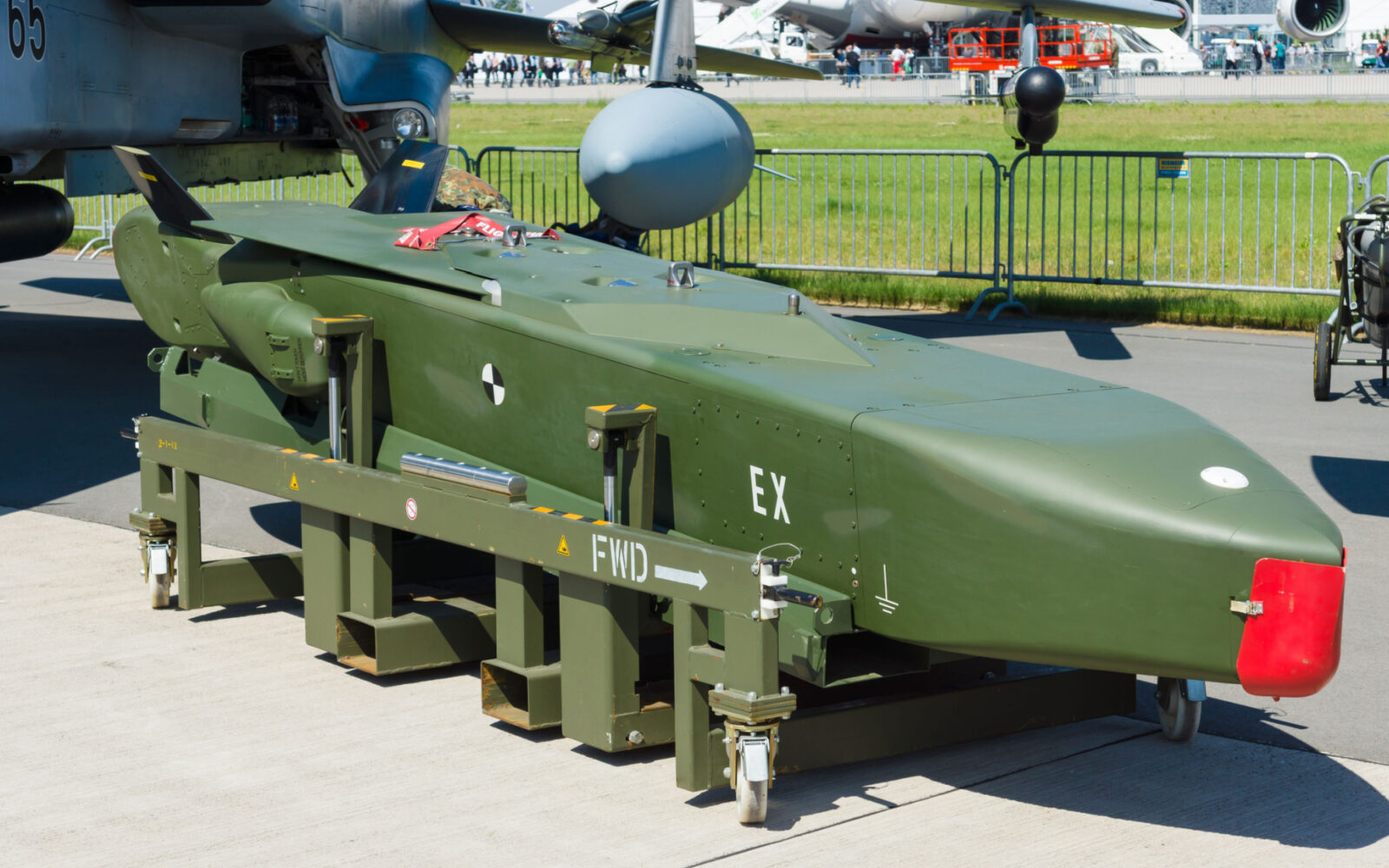
Variants
In Germany's three ruling parties and also among parts of the opposition, however, there are repeated calls for the "Taurus" cruise missiles to be delivered soon. The argument is that only with these would Ukraine have a chance of fending off the Russian attackers. However, experts agree that the weapon system would not bring about a real turnaround in the course of the war. Ukraine first formally requested the air-launched German-Swedish weapon in May.
Germany's Scholz explains his reluctance to send Taurus long-range missiles to Ukraine - The Associated Press
Germany's Scholz explains his reluctance to send Taurus long-range missiles to Ukraine.
Posted: Mon, 26 Feb 2024 08:00:00 GMT [source]
But Scholz has stalled for months on Ukraine’s desire for Taurus missiles, which have a range of up to 500 kilometers (310 miles) and could in theory be used against targets far into Russian territory. The system is a Mobile Technology Control Regime (MTCR) Category II weapon, designed to penetrate thick, hardened air defences via a very low-level terrain following flight. Day or night and in any weather, it neutralises its targets through its highly effective 481 kg dual-stage warhead system, MEPHISTO.
KEPD stands for ‘Kinetic Energy Penetrator and Destroyer’—hinting at its two-stage MEPHISTO warhead, which weighs 1,090 pounds and is equipped with two laser rangefinders. Growing support in Berlin for transferring Taurus likely springs from the observation that Storm Shadow/SCALP proved effective for Ukraine, yet didn’t result in the dreaded escalation from Russia. For hours after the audio was published Friday by Russian media, German officials did not react at all. Then on Saturday, the Defense Ministry said it was investigating, and Scholz called it a “very serious matter” that required quick clarification. The officers say the rapid deployment of Taurus missiles would only be possible with the participation of German soldiers — and that training Ukrainian soldiers to deploy the Taurus on their own would be possible, but would take months.
They have their own navigation system that uses radar data to compare the landscape with known terrain information while they fly. As they get close to the target, they use an infrared homing head to guide them accurately to the final part of their flight. The Taurus missile was created under the name Taurus, which stands for Target Adaptive Unitary & Dispenser Robotic Ubiquity System. This missile was developed in the mid-1990s as a joint effort between the German company LFK (now MBDA Deutschland) and the Swedish company Saab Bofors Dynamics. Their main aim was to make a highly accurate missile for hitting faraway targets. Taurus came from the Swedish aviation cluster missile DWS39, which could only fly 8 km.
The missile is made of modular sections which can be configured based on the individual missions. The system remains the only stand-off missile programmable for effect at a specific pre-selected floor. This extraordinary feature is achieved by applying layer counting and void sensing technology. There are some questions over the exact range of the 3,100-pound Taurus, according to Fabian Hoffmann, a doctoral research fellow at the University of Oslo, Norway.
The missile's first test flight happened in 1999, but it only started being made in large quantities in 2004. Making just one missile costs over 1 million dollars, and many hundreds have been produced. It is reported that the TAURUS missile is equipped with a two-way data line, which will make it possible to use the missile against moving targets and to redirect it in flight.
Ukraine has frequently targeted bridges with its Storm Shadow missiles with mixed results. It can also use a two-way datalink to allow for remote control by an operator while it transmits back video imagery. That could enable the missile’s use against moving targets, such as ships or ground vehicle columns, as well as a reconnaissance role for battle damage assessments before the weapon hits its target. It combines data from an inertial navigation system (INS), MIL-global positioning system (GPS), terrain reference navigation (TRN) and infrared seeker based image based navigation (IBN) sensors.
TAURUS KEPD 350 combines outstanding penetration of hard and deeply buried targets, and blast and fragmentation of high-value point and area targets with exceptional bridge-and-runway-target kill capacity. Also, it's important to note that Taurus missiles, unlike ATACMS, which we're asking the US for, aren't ballistic. We need Taurus to hit enemy facilities in the back areas of the Russian army in occupied territories. In other words, their job is to damage the enemy from within, not just at the front lines. However, it's possible that if we get ATACMS from the US, it might speed up getting Taurus.
In the past few weeks, reports about these missiles have been popping up everywhere. However, nobody has guaranteed that Ukraine's military will definitely get them. Espreso will explain the story behind their creation, their important features, and why having these cruise missiles matters for Ukraine.
The missile carries about 481kg of inert multi-effect penetrator, high sophisticated and target optimised (MEPHISTO) dual stage warhead system for superior target penetration. The ignition system of the warhead is based on programmable intelligent multipurpose fuse (PIMPF). Maximum Penetration and High Sophistication in Target Optimization At the core of the TAURUS KEPD 350’s effectiveness lies its MEPHISTO tandem warhead.
The missile can be carried by various combat aircraft, such as Tornado, Eurofighter Typhoon, F/A-18 Hornet, F-15K Strike Eagle, and Gripen. "That leaves only guided missiles such as Taurus cruise missiles, which the Ukrainian army could use to overcome the minefields laid by the Russians and retake territory," he said. BC MEPHISTO is equipped with a blasting system - PIMPF (Programmable Intelligent Multi Purpose Fuze) with elements of artificial intelligence, made by technology SHAFT (Smart Hard target Attack Fuzing Technology).


No comments:
Post a Comment